A pragmatic love letter to my husband on our 7th anniversary

Lucky number 7 years of marriage at our house today.  I don’t feel it’s necessary to wait until some big anniversary to tell my partner how much I appreciate him.

So here goes:

David,

Every year that passes, I feel grateful and blessed to have met you.  The timing of our relationship could not have been better.  Thank goodness we met in our early twenties. We were too young and stupid to be our future selves yet.  We would have hated each other if we’d met in college.  If I had been a sociologist then, it never would have worked.

There is never a dull moment in our household comings and goings.  I am so happy that we share things mostly equally and that we nearly always roll with the punches.  Life is unpredictable and far from fair, but I feel like I stand stronger with you on my team.  You may feel like I never listen to you, but your opinion and your support matter more than you will ever understand.

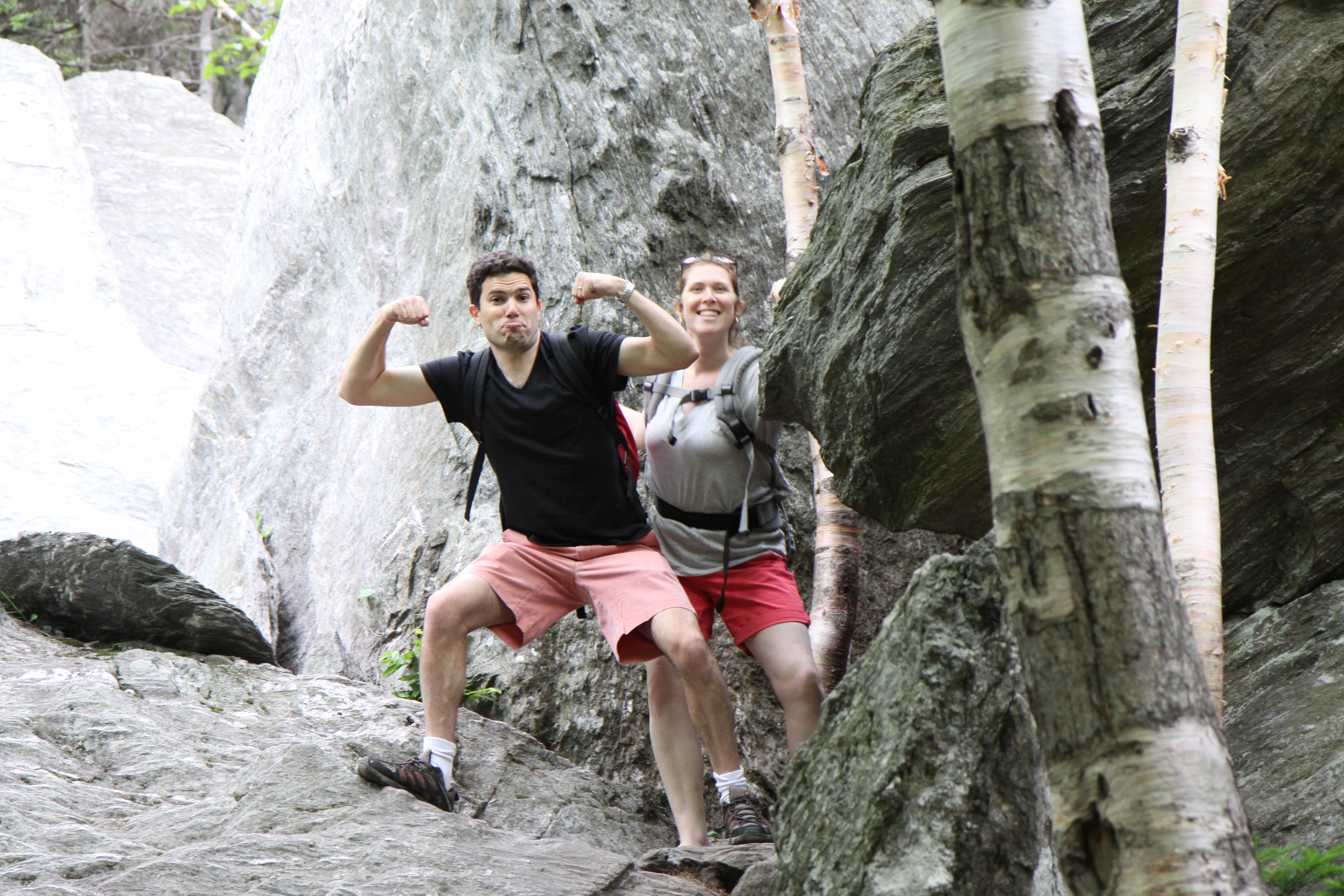
Summer 2012

Summer 2012

We become more like ourselves and like each other as we get older.  That means you may be getting more reticent or more obsessive but it also means you’re getting more silly and care-free-ish.  I’ve adopted your sense of humor, and you’re (finally) starting to use your sociological imagination.

I knew you’d make an incredible father and every day, you surprise and amaze me.  You have patience and reverence for everything our girls do.  Even when we’re worn down by the daily grind or the frustration of being grown-ups, you have this endless supply of love and affection for those two little women.  You wear the tiaras, sing the princess songs, kick the soccer balls, cuddle the tears, and kiss the boo-boos.  Watching you father them warms my heart.

Being married to you takes work, and I’m not trying to be cute.  We don’t want to disappoint each other.  We want what’s best for each other and for our family. Maintaining and sustaining any relationship (and especially a marriage) takes attention, dedication, love and selflessness.  It is not easy but the payoff–a silly, happy fun marriage–is worth it.

Thank you for being in it together.

Love,

Rachel

Posted in blogging, family, fatherhood, kids, lessons learned, marriage, parenthood, personal, writing | Leave a comment

On teaching, writing, and teaching writing

In a recent conversation with my mother-in-law, I discussed my frustration with teaching writing.  She lamented that students really learned to write in high school and many secondary schools were failing at that task.  I wondered [aloud to her] whether writing is something that we learn only once or at one point in time.  I challenged her to think about “writing” as an ongoing practice, as something that can be constantly improved.

As much of our interpersonal communication takes place via email or text messaging, writing could not be more important.  Yet, I’m unsure if my students understand or care about the stylistic and structural differences between writing an email and writing a research paper.  Sure, on the surface, they understand that colloquial, “texting” language is not going to fly in a formal essay.  That does not prevent their laid back tone in a research-based assignment.  We are so focused on teaching content that we forget our responsibility to enhance other skills students need to be successful in the classroom and beyond like writing.  I hardly think we’re teaching students to be readers and writers.

At my graduate institution, I taught courses classified as “writing intensive” (or W) and generally, this meant that students could expect more writing or a long-form research style paper as a final assessment.  The classes were small to allow for one-on-one interaction between instructors and students and to ease the burden of grading on the instructor.  Other grad students (and many faculty members) hated teaching W-classes because of the extra work grading student essays.  I was most frustrated listening to colleagues lament the skill-level of their student writers as though there was nothing that could be done with the particularly “weak” writers.

I preferred the writing intensive course, but truthfully, I treat all of my courses like W-courses.  Assessing knowledge in the social sciences is subjective and writing tests students’ knowledge in a way that multiple choice exams simply can’t.  So, no matter how many students enroll in my courses and whether or not my courses are designated “writing intensive,” I always include writing as a form of assessment.  When students complain that the course required “too much writing,” I have to wonder how we silo writing as some sort of special event in our education.  If there is anything I have learned in graduate school, the only way to improve your writing is to practice writing.

To prepare graduate instructors and faculty members to teach these W-courses, our campus writing center offered a one-day tutorial about how to handle the writing intensive expectation.  In one day, the very enthusiastic writing center director (an English professor) communicated ideas, strategies, and best practices for writing instruction.  I have heard some colleagues lament the teaching of writing because it comes at the expense of teaching content.  I simply do not understand this perspective because in my experience, the content knowledge deepens when students write about them.

When I attended my “W-training” a few years ago, I bumped into my advisor.  She was teaching a W-course for the first time at the institution during the same semester I was teaching my very first course.  The training opened my eyes to a new pedagogical ideas and styles.  Our graduate training never addressed writing as a practice that you work on, that you refine, or that you develop.  I didn’t start to connect with my writer-self until much later in my graduate training, well after I started teaching.  It should come as no surprise that as scholars, we know strong writing is important but we struggle to teach writing.

This summer, I’m reading about teaching writing. It’s as meta as it gets, but it’s time I need to devote to developing my own writing practice and to enhancing my pedagogical approach to teaching writing.  I should not find it hard to believe that even after I have earned my doctorate, there is still more to know.  It is reassuring to find that after so many years of aspiring to be a writer (it really is the only thing I dreamed about “when I grow up”), I am finally a writer.  Now, to convince my students that they are writers, too.

Posted in academia, higher education, lessons learned, reading, students, teaching, writing | 16 Comments

Thank you, WordPress!

What an incredible weekend!

My “Reflections on Mama, PhD” essay appeared on Freshly Pressed late Friday evening and the weekend has been a thrill.

What I was thinking when I saw Rogue Cheerios on Freshly Pressed

What I was thinking when I saw Rogue Cheerios on Freshly Pressed

In 48 hours, I have been humbled by the 666 folks who have read (or even just skimmed) my essay and the rest of the blog, logging 1,120 page views (and counting).  I had readers from every continent!  Many readers left supportive and thoughtful feedback.  A few readers even shared the essay on their blogs.  And many of you have begun following the blog, too.

I have more content rolling out this week–so excited to engage with new readers!

Thank you for reading my words, for sharing your stories and for supporting Rogue Cheerios.

Posted in blogging, community, lessons learned, personal, writing | 5 Comments

Call me crazy

This post will not win me any friends, but I know that my reflections on Mama, PhD published last week resonated with others based on the support and feedback I’ve received from friends, colleagues and readers (including one of the Mama, PhD editors). The new research I mentioned (the book, Do Babies Matter?) identifies a “baby penalty” that female academics suffer at all stages of their careers, beginning in graduate school, and yesterday, a Slate article written by Do Babies Matter? author, Mary Ann Mason, appeared in my facebook feed.

The language taken up in the popular press about this topic depresses me.  My husband would say that I’m taking this all very personally, but I think the language we use is especially meaningful and often deliberate.  I know Mason probably used sensational language to signal a sense of urgency and to communicate the sense of desperation many academic parents feel about their careers, careers that they have invested years of training, forgoing relationships and opportunities for the holy grail of a tenure-track position.  Three specific phrases in the article deflated me.

First, Mason and her colleagues discuss their study of the “baby penalty.”  The baby penalty refers to the stigma or disadvantages suffered by scholars with children. Using the word “penalty” casts parenthood in this punitive light.  There were times in the early days of parenthood, awake in the middle of the night, when I felt as though these little wiggling, screaming, creatures were punishing me.  But I assure you, that I feel no penalty having helped to create and nurture them.  I don’t know, yet, if my career has suffered any “penalty” as a result of becoming a parent.  It’s too early to tell.

Second, in the subtitle of the article, Mason refers to the creation of families as a “career killer.”  To think I killed my own career by wanting a family before I even started it is depressing. I have been advised to never discuss my family and even to take off my wedding band if I was invited to another campus for an interview for a faculty position.  Last year, however, I interviewed for an administrative position at a prestigious university, and in the course of the search, I was told that I should be open about my family because I would be perceived as more mature and responsible.  I don’t think I look terribly young but apparently parenthood signaled something to this committee that made me competitive in the search until the very end.

Third, choosing anything other than a tenure-track position is akin to “dropping out of the race.”  If you opt for “second-tier” employment (read: alternate-academic, off the tenure-track), you may find yourself in a “career graveyard.”  Is it possible to rethink the “ideal” position as something other than a tenure-track position?  I am unsure that a tenure-track position is in my future both because of the availability of positions and the competition for them.  I am also unsure that pursuing a tenure-track position is good for my nuclear and extended family.  So if I find a career where I use my skills and training, where I am professionally fulfilled, where I make a difference in the lives of others and where I have some semblance of work-life balance, should I consider myself in a career graveyard?  Sounds like heaven to me.

I know this post sounds a little whiny, but I am slowly growing sick of the rhetoric around parents, families and the academy.  I am working on my own Mama, PhD narrative to publish soon.

Posted in academia, family, higher education, lessons learned, marriage, motherhood, parenthood, popular press, Uncategorized, work, writing | 4 Comments

Reflections on Mama, PhD

My husband bought me Mama, PhD as a graduation gift. He thought I would appreciate the stories about “motherhood and academic life.”  In under a week, I tore through the anthology.  Divided into four sections, the editors captured women’s stories about “The Conversation” whether to start a family, “That Mommy Thing” that competes with more scholarly pursuits, how “Recovering Academic[s]” fare after becoming parents, and the “Momifesto” that women create for themselves to guide their own professional and personal lives.

I felt comforted to read memoirs of women’s lives as they described their worry in revealing their pregnancy to their advisory committee, the schlepping and physical challenges of being pregnant on a big college campus, the swell of support or the lack thereof from different significant others in their lives, and the realization that life would never be the same after becoming a mother.  Each vignette was short, and I found myself devouring several at a time.  After I finished each one, I was inspired to write my own Mama, PhD essay–that’s in the works for some time next week when I finish it.

A few things about the anthology trouble me, though. Originally published in 2008 (though some essays have appeared elsewhere before publication here), the anthology documents women’s experiences in the academy in the 1970s, 1980s, 1990s, and 2000s, and the differences are nearly unrecognizable.  As children of academics in the 1970s or as expectant mothers in the 1990s and 2000s, the essayists describe their struggle to “balance” professional and personal lives at the expense of their relationships and employment opportunities.  To think that no progress has been made on family leave policies (not just maternity leave because parenthood does not simply involve mothers) is terribly disheartening.

My experiences negotiating maternity benefits in 2009 and 2011 sound remarkably like the experiences women shared over twenty years ago.  My own graduate institution’s simple statement on graduate student maternity leave is largely hidden from students, and if you discover it, there is no guarantee that your department will honor it. My first daughter was due during spring break, born early March, and I was lucky that my assistantship assignments for the semester were mostly flexible. I proctored a midterm three days before I was due, graded those exams while I was in labor, and three weeks postpartum juggled childcare to return to campus once a week for a seminar taught outside of my department. For my second daughter, however, due over the summer (a “perfect academic baby” many told me), the benefits did not apply because graduate students are not paid during the summer.  A few weeks after my second daughter was born, my office mate welcomed his first child and as a new dad, he received no consideration for leave to be there for his family.

Besides the lack of flexibility and support for growing families, I was also troubled by the extreme guilt and shame felt by so many of these soon-to-be and new mothers.  Essay after essay, women described their drive to be academic “superstars” and their disillusionment about the true demands of parenting very young children.  While I felt similar disillusionment when my oldest daughter was born, thinking I would be able to attend a conference several states away to present a paper ten days after she was born, I was never disillusioned about the importance of family life for myself and someday hoping for children of my own.  I married my husband two months before I started my graduate program, and we knew we wanted to start a family in the coming years.  I also knew that starting graduate school six years after receiving my bachelor’s degree meant that waiting until “after tenure” (and that’s if tenure ever even happened) was not an option.

As the disillusioned mothers professed their experiences, I was troubled to read about the traps other scholars set for academic parents.  Even if new mothers felt dedicated to their scholarly research, their advisory committees or their colleagues discounted their work, questioned their dedication, or simply “parent tracked” them.  Like these essayists, I worried about telling my advisory committee that I was expecting a second child when I was in the throes of putting together my first (failed) dissertation proposal.  I did not want them to give up on me or ignore me.  I was determined to finish my dissertation project because I could not walk away.

No birthing classes or first-aid lecture can prepare you for how hard those first few months of parenting will be as competing feelings of pride, fear, love, hope, and despair overwhelm your heart.  Your body fails you, your mind fails you, you fail your partner, and you feel really, really tired.  But you also discover inner strength and resolve, the dark days pass, and your expectations about everything change.  I do not question for one second the decision to become a mother when I did.  Unlike some of the essayists, I do not feel ambivalent, shameful or guilty about my decision to be a mother.  I know I may be perceived as less serious, but I feel no less serious about my research agenda.  I am still unsure of my next professional move, and even if it does not involve the tenure-track, I am still planning on using the skills I developed conducting and presenting my research.

You may be thinking that all of this is simply anecdotal evidence.  Sadly, new research confirms that women suffer a penalty for trying to have a family and an academic career. In their new book, Do Babies Matter?, Mary Ann Mason, Nicholas Wolfinger, and Marc Goulden describe the “baby penalty” that affects female scholars’ wages, their job security, and their engagement in the academic labor market at every phase of their careers.  A newer collection of essays out this month, Mothers in Academia, edited by Maria Castaneda and Kirsten Isgro, piles on similar frustration and disappointment about women’s work and life “balance” in academe.

I am not sure if I have been “parent tracked” but I do know that my family is important to me, and decisions about my or my husband’s professional lives will always take the well-being of our family and our marriage into account.  We would not choose to have jobs that forced us apart, we want to remain close to our extended family if we can, and we want our children to have both of us present in their everyday lives.  If that means that I make deliberate professional choices and pursue non-tenure-track or alternative-academic opportunities, I feel comfortable with that arrangement.
Posted in academia, family, fatherhood, gender equality, grad school, higher education, kids, lessons learned, marriage, motherhood, parenthood, reading, women, work, writing | 78 Comments

Ease in….

A year ago, a dear friend encouraged me to join her in a “Couch to 5K” running program. Before I had my kids, I ran for exercise, but I was hardly a “runner.” Never terribly “sporty,” I have been trying to get good at running since I was a sophomore in college when I just decided I would try to run for exercise. She assured me that a smartphone app would “coach” me through training sessions and in several weeks, I would be prepared to run a full 5K. So, like anyone looking for motivation to get exercising, I downloaded “Ease into 5K” and got running.

20130604-092121.jpgOr should I say, got walking. The first few weeks of the “Ease into 5K” program involve walking interspersed with short bursts of running. Interval training like this is designed to increase your endurance. The walking intervals grow shorter while the running intervals grow longer. Eventually, you should be able to endure a 5K. In theory.

I hated interval training. I felt like a lunatic simply walking and wanted to just start running. Considering, I was in terribly bad shape at the time, I don’t know why I didn’t simply relish the walking because I began to think running was boring, too. Easing into running was excruciating. I just wanted to be a runner right away and I was unconvinced that interval training or “easing” into it was going to be effective. During those exercise sessions, I must have written this very essay about “easing” into running in my head ten times over.

I got through the whole program but unsurprisingly never actually ran a 5K. I was trying to make a big change over time–that is exactly how many experts advise you to make changes. Eat the elephant one bite at a time. I could not accept the process and felt frustrated all along the way, however. One bite at a time felt too slow.

I have come to discover that “easing” into anything means slowly controlling one’s approach. At the beginning of this past April with no idea when I would announce my dissertation defense, I decided to start exercising again. A year after the “Couch to 5K” debacle, I decided to simply start walking. And unlike last year, I felt no compulsion to do anything other than walk. I was changing up my routine, getting outside, and doing something other than worry about my dissertation. After almost a month of simply walking, of “easing” into a new routine, I actually wanted to start running. I wanted a new challenge.

The “Couch to 5K” frustration has surfaced in the last two weeks since submitting my graduate school paperwork and finishing my doctoral program. I have spent weeks and months, especially during this past academic year, rushing through reading and writing, leaving little time for thinking or reflecting. The deadlines loomed large in front of me and having met them, now I get to steer the ship. I am “easing” into a new phase of work and I am uneasy in the transition. I want to be established, have good work habits, and feel settled. Instead, I feel disorganized, unproductive, and undisciplined. The transition phases take time.

I’m staying the course, however, and trying to ease in to the next chapter. I have been able to keep on walking and I have added in yoga. I have started reading again. The last two weeks have felt like slowly and intentionally releasing a clenched fist, relinquishing control of energy and pressure. And with less stress heaped on, “easing” in actually easier than I thought.

Posted in dissertation, grad school, health, lessons learned, personal, reading, work, writing | 2 Comments

Back to basics: reading, writing…

Last week I ended my long-standing graduate school relationship. This transition has been both easy and challenging for me. I have always known that I am a workaholic but I never realized the extent of the addiction.  It feels awkward to be away from a computer (this is sad) and without a to do list (even more pathetic).  As I cleaned out boxes from my office and consolidated books, notes and documents, I could not help myself, making a list of items to tackle.

So many things have changed in my work life since I started graduate school seven years ago.  I have so many physical papers and documents to handle, far more than I accumulate now.  Now I scan as many things as I can and I keep a very organized filing system of my documents.  I cannot believe I have every letter ever sent to me from my department saved in a file folder.  But I do.

I have so many books that I have not opened in years.  Even though I tried to tailor my coursework to relate to my research specialty, many seemingly tangential texts have come live at my house.  I feel compelled to make space on the bookshelf for them, but I also feel compelled to cut bait them.  A stack two feet tall stands sentinel over my desk now.  I have traded a few in with Amazon and I am still trying to figure out what to do with the rest.

More than the physical clean up after filing my paperwork, I am trying to disconnect my brain from the last few months of myopic focus on my dissertation work. I have been so one-dimensional, I am finding it tough to plug into something new.  All of the editing and “writing” (which was really rewriting) has led to a few terrible habits.  I am not writing every day and daily writing leads to better writing.  I am also not reading as much as I should and daily reading also leads to stronger writing.  So as I clean up the office, I need to institute some new work policies and go back to the basics.

In the last week, I have been reading with a goal to be both reading and writing.  I finally tackled an article in The New Yorker on MOOCs.  I actually read one section of the Sunday New York Times.  I’ve started an anthology of stories on motherhood and the academy called Mama, Ph.D.  And I’m trying out an e-book about the first female ocean rower, Roz Savage.  Different genres, varied media.

The reading is teaching me how to refine my sociological storytelling.  The reading is forcing me to unplug.  More importantly, though, the reading makes me want to do more writing.  In graduate school, I always thought writing came when you were ready to write, after the research was done, the analysis complete. But a good writer needs to practice constantly, never waiting for the “right” time.

Back to basics and time to build some new good habits.

[Tell me about your good work habits or how you handle work transitions–I’m clearly trying to figure out this next phase of work life and can use all of the help I can get.]

Posted in academia, blogging, lessons learned, reading, work, writing | 7 Comments

Now what?

When you have been actively engaged in accomplishing one specific task for an extended period of time and you actually achieve your goal or finish that project, the next day feels both exhilarating and confusing. On Monday, I filed all of the necessary paperwork with the graduate school and cleaned out my graduate office. My long relationship with my university has come to a close.

Now what?

I know that I advised new graduate students to prepare for these transitional moments, but something about this particular transition feels vastly different from ending a semester or sending off a journal article. It’s a seismic shift in where I stand in my professional life.  I am not a student anymore.

In theory, the dissertation is meant to be the very beginning of a lifetime of research and scholarship production.  The rest of the world does not see it that way.  My dissertation is done so I should be done, right?  Now that I am no longer a graduate student, there are a few things I need to clear up.

First, I will not miss writing at the coffee shop.  That’s because I have plenty more to write and I plan to continue writing fueled by Stumptown coffee and scones at Hartford Baking Company.  This summer I have two old journal rejections I need to resurrect from the back burner and send out.  I will be devoting more time to Rogue Cheerios, posting more frequently.  There is no shortage of work in my world.

Second, the summer is not a vacation for people in higher education. Sure the students are home working at their internships, but the summer (and other vacations) are a time to play catch up, to plan for the next year, and to make progress on other projects.  I have been asked what I’ll do with my free time, but I have enough work to fill my summer.  I ranted about this topic earlier this year during winter break.  [I will probably continue to rant about this topic several times a year]

Finally, I am still unsure of my next professional move. I am luck to have a secure, full-time position for the coming academic year that actually starts paying me in July.  I do know that I am a workaholic, so I plan to leverage the short term stability into massive productivity when it comes to research and teaching.  I am terrible at relaxing and after serious layoff scare with my husband’s company yesterday, I am more motivated than ever to be productive so that I can find a secure job.  That means over the next year, I’ll have a manageable teaching load and can negotiate the next steps of my professional life. When I know more, I’ll be sure to let you know, too.

My summer plan includes getting (hopefully) two articles in a publication pipeline, working on a new and fun project with my grad school bestie, prepping my courses for fall, and framing out a project I plan to start in the fall as well. I also plan to hang out at the pool and the beach with my littles, cook (many many things), grow vegetables, read the New Yorker, and exercise.  Hopefully there will be sandy toes, lobster rolls, cocktails, naps, ice cream, and lots of blogging in my future.

Now that sounds good.

Posted in academia, blogging, coffee, family, grad school, higher education, lessons learned, work, writing | 2 Comments

Discovering I’m a reluctant (and proud) dance mom

As spring approached, some local friends began signing their preschoolers up for activities.  My husband and I decided to sign the girls up for a round of swim lessons because we consider swimming to be an important life skill.  I declined offers to engage my preschooler in weekend soccer leagues or running clubs.  We have many years of weekend extracurricular commitments ahead of us.  Really, though, I was not ready to be a soccer mom.

Since October, however, we have had our preschooler enrolled in a dance class.  We haven’t taken our kids to music class because they go to a childcare facility every day where they provide some of the activities periodically.  My daughter expressed an interest in dance class and our local JCC had a seemingly low-key dance program (no mandatory dress code and lower tuition), so we signed her up.

I had extremely low expectations for dance class. I just hoped to see some actual dancing at home.  My preschooler closely guarded her dance moves. She won’t shake it for just anyone or just anywhere.  Any actual dancing we’ve seen has been a big event.  The few parents who come to class began to piece together the recital number with bits of information from their three and four-year olds–we collectively discovered the music (“Twinkle Twinkle”) and some of the tap routine (Shuffle one, shuffle two).

Let’s face it: the dance class is totally about us.

My husband was actually the one who thought dance class would be a fun idea, and my schedule was flexible enough that I could get her there on Tuesdays at 3:45pm.  Week after week she shooed me out of the class and week after week I snuck in at the end, hoping to catch a little bit of tap dancing.  Though I had avoided being a soccer mom temporarily, I was squarely turning into a dance mom.

And Tuesday is her very first dance recital.

The dance recital both delights and horrifies me.  The costume (which cost more than I thought it would) looks like exactly the costume you’d want to wear if you were four years old. There are sequins and a puffy tutu and it’s pink (a color she loves).  It is also a fake off the shoulder leotard–really?  She’s four and it’s too soon for her to understand that a little shoulder shake will bring the boys to the yard.

Dress rehearsal day was a dizzying two hours.  I brought my preschooler to the JCC dance studio and found a complete and utter zoo of sequins and chiffon, fluff and fuzz.  There were so many tutus that even I was overwhelmed, but somehow my little sweetheart was  not nervous at all–she shooed me away like it was any old Tuesday afternoon.

In the audience, I cheered her on audibly. I whispered the routine to myself and whisper praised her when I knew she nailed the steps.  She was dancing!

As a sociologist mom, I am simply trying not to be Frances McDormand in Almost Famous.  I want to raise liberated, self-assured daughters but I cannot help it if they love a fluffy tutu.  And I have to get over the fact that my pride in these early accomplishments makes me a temporary walking contradiction.  I thought I was a reluctant dance mom but it turns out I’m pretty proud, too.

Posted in family, gender equality, kids, lessons learned, motherhood, parenthood, socialization, writing | 1 Comment

Only 361 days until NEXT Mother’s Day.

I have never liked Mother’s Day.  There, I said it.  And it’s not because I lost my own mother six years ago.  In thinking through this post, I have done some informal social scientific polling and have found that I am not alone in my aversion to Mother’s Day (and Valentine’s Day and other Hallmark “holidays”).

Even before my mother passed away suddenly, I was acutely aware of the mass consumption that surrounded the “holiday.”  I thought that I expressed my appreciation for both of my parents as often as I could and I felt resentful that this one day on the calendar upped the ante in terms of mother-love.  I did the Mother’s Day thing for my mom because she liked having a special day.

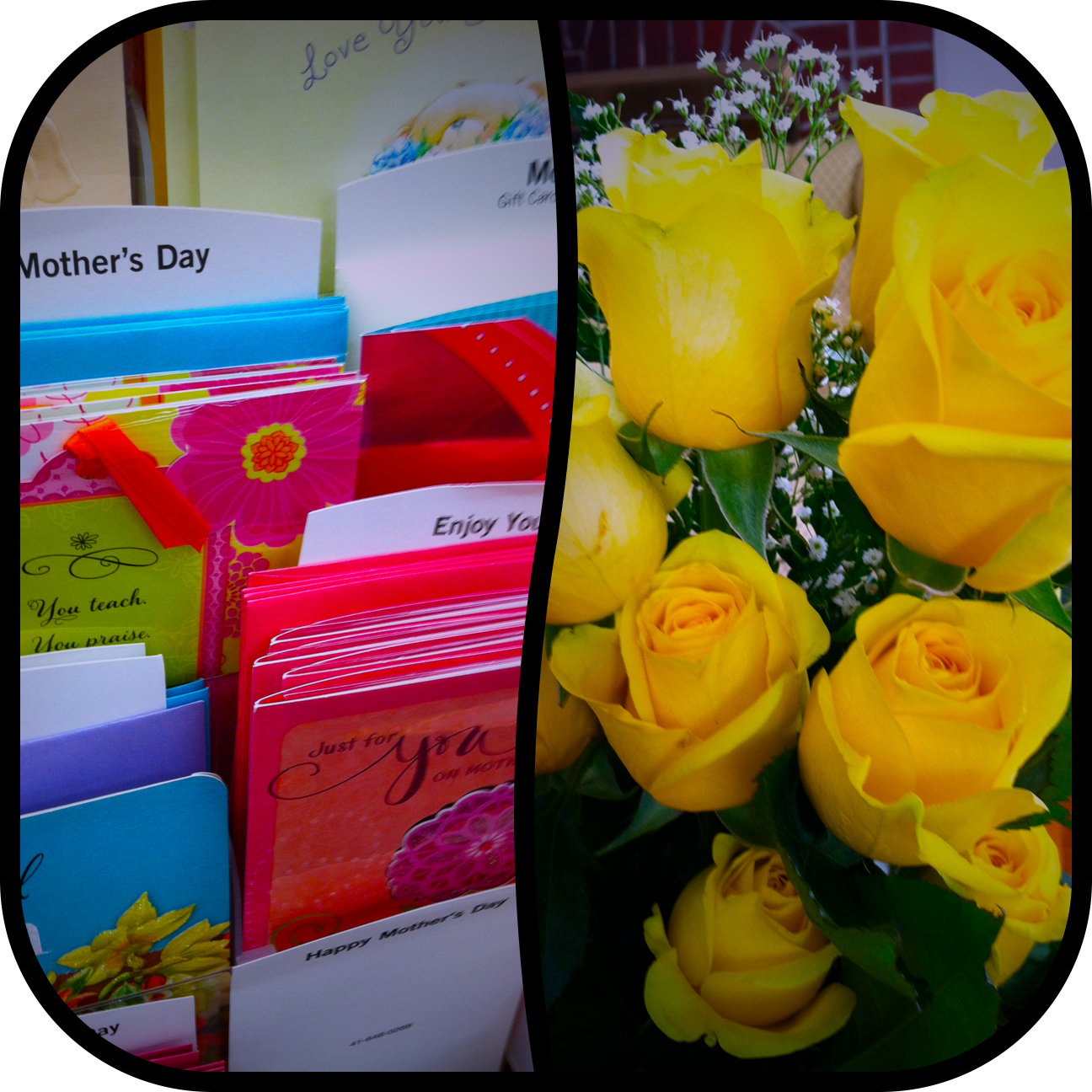
Mother's DayMy conscientious objection to Mother’s Day has less to due with expressing love and appreciation for our mothers (and our aunts, grandmothers, cousins, sisters, friends) and more to due with the monetization of our appreciation.  Mother’s Day like other Hallmark “holidays” has strayed from its roots.  Mother’s Day grew out of a church service honoring the efforts of mothers to improve working conditions for other women and raise awareness of women’s suffering around the world.

Unsurprisingly, the ads for Mother’s Day imply that all mothers’ roles have changed little in the twenty-first century.  On Mother’s Day, we encourage mom to “take a break” from mothering and household duties (like cooking) to relax, as though mothers are overbearing and relentless, constantly cleaning and cooking.  One hundred years after its inception, Mother’s Day is about buying presents and sending flowers.  Flower purchases for Mother’s Day account for one-quarter of all holiday flower purchases yearly and Americans spent $17B on Mother’s Day gifts in 2012.  That’s up from $15B in 2009!  We hardly think about where these flowers come from [spoiler alert: the flowers are largely grown in Columbia where works conditions could be questionable] . I often wonder if Columbian mothers working on flower farms wish they had a day to themselves, celebrated with brunch and roses.

I wish I had captured more media images of Mother’s Day goods, but I can’t.  Retailers have moved on to Father’s Day.

Posted in gender equality, holidays, motherhood, personal, women | 1 Comment